
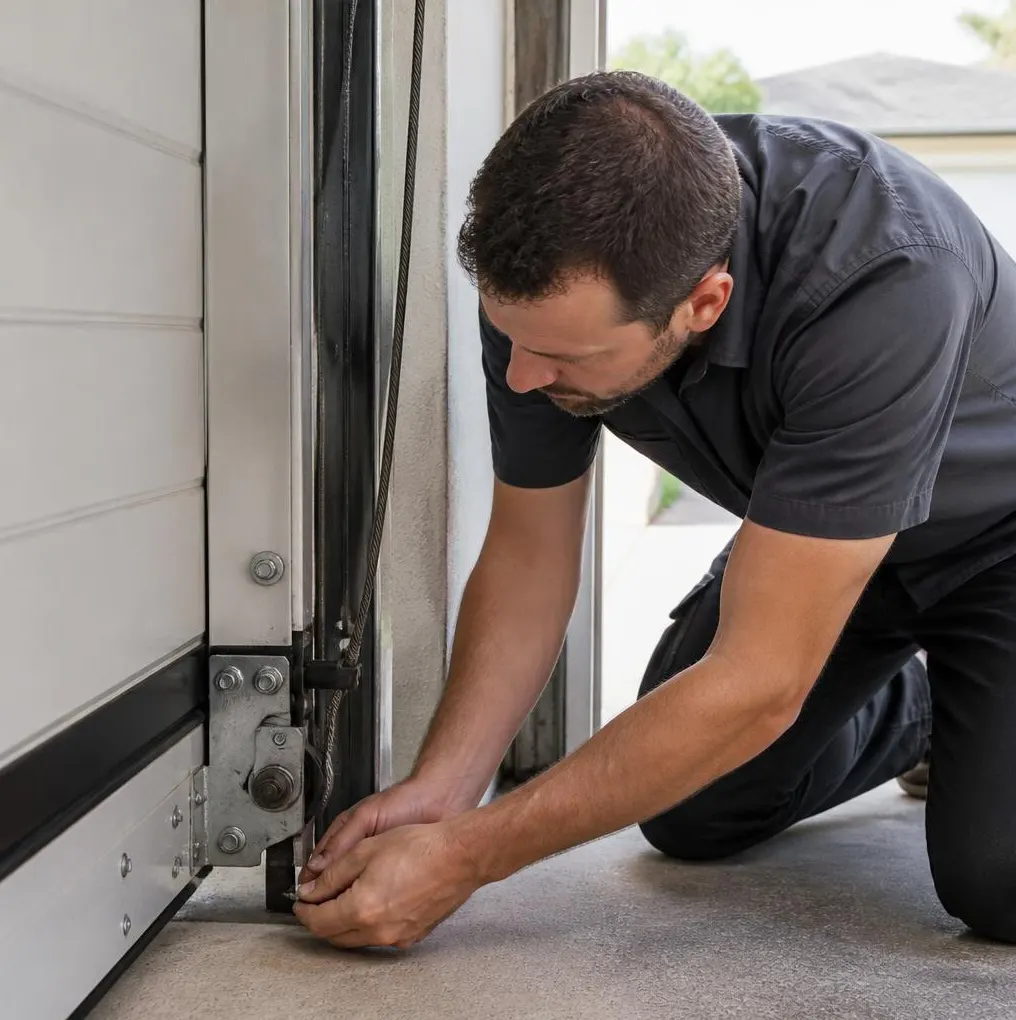
The Argument Starts in the Garage
It usually goes something like this: you're standing in the garage, staring at a door that's groaning on its way down again, and your spouse says, "Why don't we just get one of those commercial steel doors? The warehouse by Lake Michigan Dr has had the same door for twenty years and it never breaks." You're not totally sure they're wrong, but something about putting a loading-dock door on a house doesn't sit right either. You're both half right, and the difference actually matters for your budget, your winter heating bill, and how often you'll be calling someone to fix it.
What Actually Makes a Commercial Door Different
Commercial and warehouse overhead doors aren't just bigger versions of a residential door. They're built around a completely different job: opening and closing dozens or hundreds of times a day, often in an unheated bay, with forklifts and delivery trucks banging around nearby. A few real differences:
- Steel gauge: Commercial doors typically use heavier-gauge steel (often 24-gauge or thicker) versus the lighter gauge common on residential doors, because they take more physical abuse.
- Springs and cycle life: Commercial torsion springs are rated for tens of thousands of cycles because the door is opening constantly during a workday. A residential spring is rated for far fewer cycles because a house door might open four to six times a day, not every few minutes.
- Track and hardware: Commercial doors often run on heavier tracks with reinforced brackets to handle constant use and larger, heavier door sections.
- Insulation approach: Some commercial doors skip insulation entirely if the building doesn't need climate control in that bay. Residential doors, especially in a climate like ours, almost always need insulation to keep an attached garage from turning into a freezer.
- Operators: Commercial door openers are industrial-grade motors built for constant duty, not the residential chain or belt drive that opens your door a handful of times a day.
Why Your House Isn't a Warehouse
Here's the part that settles most arguments: a warehouse door is engineered for cycles, not for insulation or curb appeal. Your garage door has a different job. It needs to look decent on the front of your home, seal well enough to keep out wind-driven snow, and survive maybe one to two thousand open-and-close cycles a year, not per week. Putting a commercial-grade uninsulated steel door on a house in West Michigan means you'd be trading a smoother opening mechanism for a door that does nothing to stop the cold air pouring into an attached garage during a January cold snap. You'd likely spend more upfront for hardware your house will never fully use, while losing the insulation value that actually matters here.
On the flip side, a residential door also isn't built to survive warehouse-level abuse. If you've got a home business, a hobby shop, or a detached garage that functions more like a small commercial space with frequent daily traffic, that's a different conversation, and a heavier-duty residential or light-commercial door might genuinely make sense.
Maintenance Looks Different Too
Because commercial doors cycle so much more often, they need professional maintenance on a tighter schedule, sometimes quarterly, to catch spring fatigue and track wear before a high-cycle failure happens mid-shift. Residential doors don't need that kind of attention, but they do need maintenance tuned to our climate instead of to cycle count:
- Before winter: Check weatherstripping for cracks, since road salt spray and freeze-thaw cycles break down rubber seals faster than people expect.
- During winter: Keep an eye on the track for ice buildup and ask about cold-weather lubricant, since standard grease can thicken and slow the door in deep cold.
- Spring thaw: Mud season can introduce moisture into the bottom seal and lower hardware, so a check for rust on hinges and the bottom bracket is worth doing once the ground dries out.
- Summer: Humidity and storm activity put more strain on openers and sensors, so this is a good time to have the opener's force settings and safety sensors checked.
None of that matches a commercial maintenance schedule, and it shouldn't. Your door isn't working a shift; it's working a season.
So Who Actually Needs a Commercial-Grade Door?
A heavier-duty door makes sense if your garage is used almost like a small business: a contractor who's in and out all day, a home-based workshop with constant equipment movement, or a detached structure that sees daily heavy use beyond a typical household. For a standard attached garage, even one that houses two vehicles and a snowblower, a quality insulated residential door with properly sized torsion springs is the right call, not an upgrade to commercial-grade steel.
When to Call Allendale Garage Door
If you're genuinely weighing a heavier-duty door because your garage gets unusually heavy daily use, that's worth a real conversation rather than a guess based on what a warehouse uses. Our team can look at your actual usage, your garage's exposure to wind and cold, and recommend the right door weight and insulation level for your situation, whether that's a standard Garage Door Installation or something built for more frequent cycles. And if your current door is just struggling through another Michigan winter, a Garage Door Maintenance visit before the cold really sets in can catch worn springs, stiff track, or failing seals before they turn into a Saturday morning no-go.
If your garage door debate started because something's actually wrong, not just a difference of opinion, give Allendale Garage Door a call. We serve homes throughout Allendale, Jenison, Hudsonville, Standale, Coopersville, Grand Haven, Zeeland, and Holland, and we're happy to tell you honestly whether you need a new door or just a tune-up before winter.